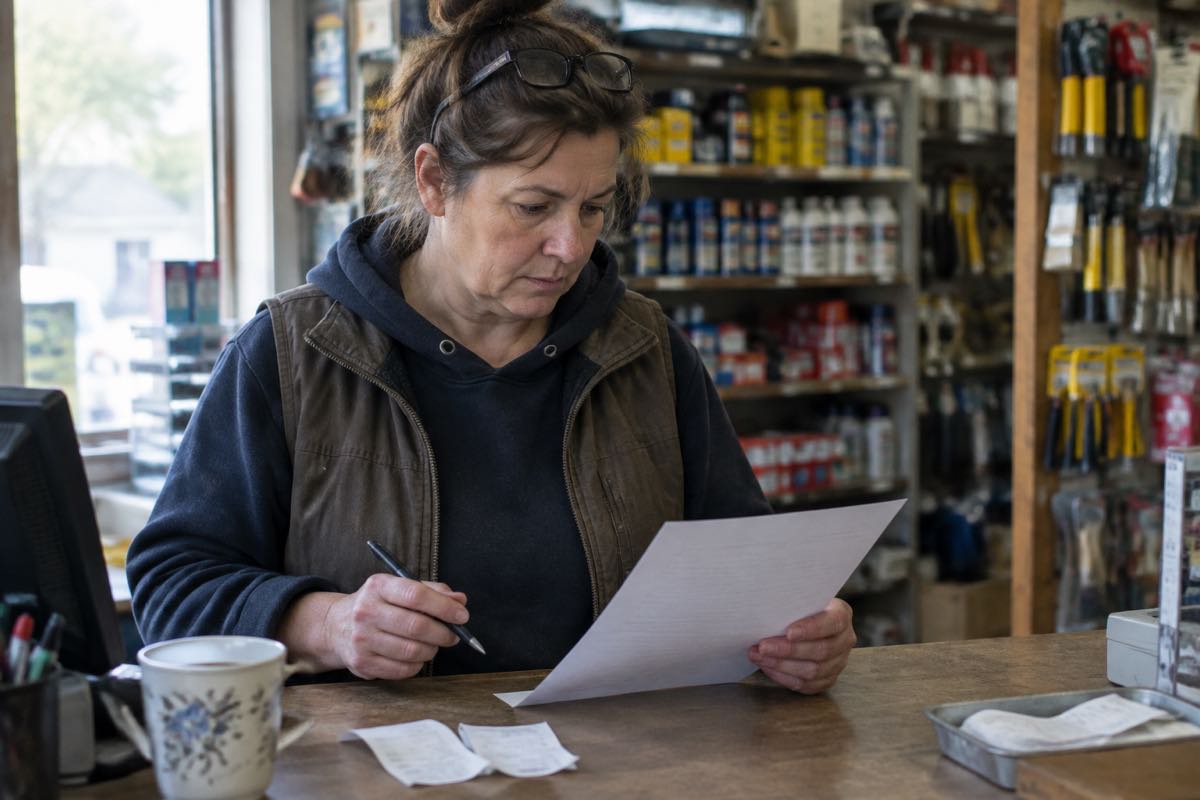
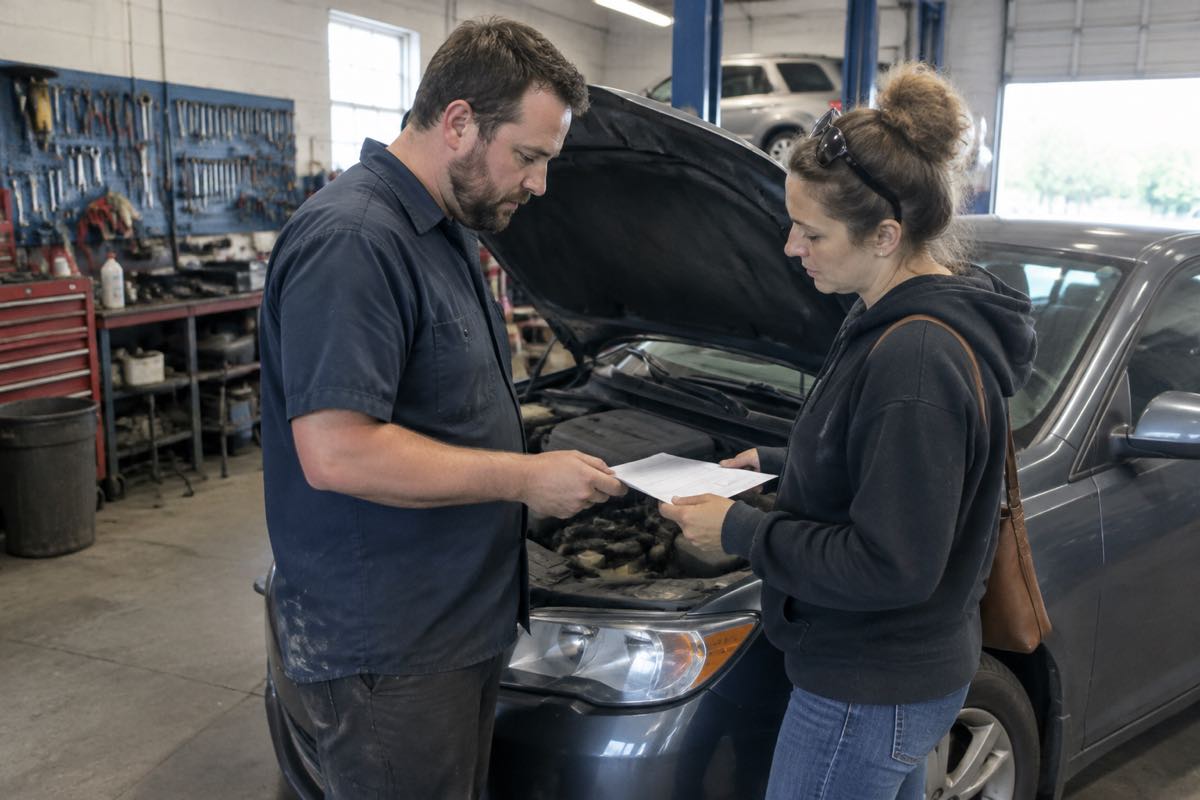
Sooner or later a service advisor says something like this. "You'll want to keep bringing it here, or you could lose your warranty." It sounds reasonable, it comes from someone in a uniform, and for many drivers it settles the question. So does an independent shop void your warranty?
Under federal law, the general answer is no. The Federal Trade Commission states it directly on its auto warranties page, telling drivers, "You don't have to use the dealer for repairs or maintenance to keep your warranty in effect." The same page says your warranty stays in effect if you use aftermarket or recycled parts.
The exceptions are where drivers get into trouble. Repairs paid for by the manufacturer have different rules, and poor records can turn a valid claim into a long argument.
We should say where we stand. American Business Recognition scores US auto repair businesses and other local companies using public Google ratings and review counts, and many of the shops we recognize are independents. We also sell optional promotional packages to businesses. Keep that interest in mind as you read. We are not attorneys, and this guide is general information rather than legal advice.
Our position is that drivers should choose a maintenance shop on quality and price, then protect that freedom with a folder of receipts. The law is on your side, but paperwork is what makes it work.
The Federal Law Behind Your Choice
The rule comes from the Magnuson-Moss Warranty Act, a federal law from 1975 that governs written warranties on consumer products, including cars. One of its provisions addresses what lawyers call tie-in sales, which are warranty terms that require you to buy a particular brand of part or service to keep your coverage.
The FTC's guide to federal warranty law puts the rule simply, saying "Generally, tie-in sales provisions aren't allowed." The guide describes these as terms that state or imply a consumer must buy or use an item or service from a particular company to keep warranty coverage.
For cars, the FTC has spelled out the practical meaning. In advice to drivers, the agency said it is illegal for manufacturers or dealers to refuse to honor a warranty or deny coverage simply because someone other than the dealer did work on the car.
The law also carries weight beyond cars. In 2022 the FTC took action against Harley-Davidson and Westinghouse generator maker MWE Investments, alleging their warranties conveyed that coverage would be void if customers used independent dealers for parts or repairs. The final orders required the companies to change their warranty language and notify customers, and the FTC can seek civil penalties of up to $46,517 per violation if the orders are broken.
Those were not automobile cases, but the principle is the same one that protects your oil change at the shop down the street.
Maintenance Is Yours to Place
Routine maintenance is the clearest part of this subject. Oil and filter changes, tire rotations, brake pads, fluid services, wiper blades and scheduled inspections can be done by the shop you choose, or by you in your driveway.
What the manufacturer can reasonably expect is that the work happens. The FTC's auto repair guide warns that neglecting maintenance may invalidate your warranty and advises following the schedule in the owner's manual. So the real obligation is doing the right service at the right interval, using fluids and parts that meet the specifications in the manual.
Two habits will cover most situations.
Follow the owner's manual, instead of the shorter service menu you may be handed at the counter. Some manuals have separate schedules for normal and severe use, so choose the one that truly describes your driving.
Make sure each invoice names what was done. "Oil change" is weak evidence. "5 quarts 0W-20 full synthetic meeting the manufacturer's specification, oil filter, odometer 31,204" is strong evidence.
Choosing a capable shop matters here, since the freedom to go anywhere includes the freedom to go somewhere bad. Our guide on how to choose an auto repair shop walks through reviews, credentials and written estimates.
Aftermarket Parts and Who Must Prove What
An aftermarket part is one made by a company other than the vehicle manufacturer. Many are perfectly good, some are the same part in a different box, and a few are junk. Federal guidance does not treat the category as disqualifying.
The important point is the burden of proof. The FTC says "The manufacturer or dealer must prove the aftermarket or recycled part caused the damage." Its older guidance gives an example involving a belt. If a belt was improperly replaced and the engine later fails, the manufacturer has to show that the belt caused the engine damage, rather than some other defect.
This cuts both ways, and fairness requires saying so. If a faulty part or poor installation does damage a covered component, the warrantor can deny coverage for that repair. The FTC notes that the warranty would still be in effect for other parts of the car. One bad oil filter does not erase your transmission coverage.
Performance modifications deserve extra thought. An engine tune, a lift kit or an exhaust change does not automatically end the warranty, but in our view these changes make it much easier for a manufacturer to argue the case against you if a related component fails. If your car is under warranty and you plan to modify it, ask the dealer in writing how that part will be treated, and weigh the answer against the cost of the component it could affect.
When a dealer says "that part voided your warranty," the useful reply is a question. Ask them to show you, in writing, how that part caused this failure.
Where the Dealer Really Is Required
Federal law does leave room for manufacturers to steer certain work. There are several situations where the independent shop is the wrong choice.
Free warranty repairs. The FTC guide makes an exception for items or services provided free of charge under the warranty. In plain terms, if a covered component fails and the manufacturer is paying for the repair, it can require you to use the dealer and the parts it selects. Paying an independent shop for that same repair may leave you with the bill.
Safety recalls. Check your vehicle on NHTSA's recall page with your VIN. Recall repairs are free at a local dealership, so a known defect should go there before you pay anyone.
Free or prepaid maintenance plans. If your new car came with complimentary oil changes, or you prepaid for a dealer maintenance package, that package may have its own rules. Read the terms before assuming you can take its benefits elsewhere.
Extended warranties and service contracts. These are often misunderstood. The FTC says "An auto service contract or extended warranty is not a warranty as defined by federal law." Coverage is set by the contract you bought, and the contract may limit where repairs are performed or require approval first. Read it, and call the administrator before any covered work begins.
Certain emissions and manufacturer programs. Federal rules give certain emissions parts longer coverage, and individual manufacturers run programs with specific conditions. Your warranty booklet is the document to consult for exact details.
What to Keep in Your Records
Records win most warranty disputes before they begin. The FTC's advice is short, telling drivers to "Keep all service records and receipts, regardless of who performs the service." It also notes that a warranty company could ask for your maintenance records.
The FTC's repair guide says a completed repair order should list each repair, the parts supplied and their cost, labor charges, and the odometer reading when the car came in and when the work was finished. Treat that as your minimum.
A simple system works well.
- Keep one folder or one phone album for each vehicle.
- Save every invoice, including those for oil changes and tires.
- Confirm each invoice shows the date, mileage, VIN and shop name.
- Check that fluids and parts are named with specifications or part numbers.
- If you do the work yourself, keep receipts for parts and fluids, and write down the date and odometer reading in a log.
- Keep any written estimates and warranty terms for repairs.
Photograph paper receipts right away, because thermal paper fades. Back up your folder to cloud storage, and pass it to the next owner when you sell the car, since a complete service history can also help at resale.
Shop owners can help their customers here too. A repair order that lists part numbers, fluid specifications and mileage takes seconds to produce, and it gives the customer exactly what a manufacturer will ask for. Many independent shops could make a real selling point of this, by telling customers at the counter that their paperwork is built to stand up in a warranty claim.
What to Do if a Claim Is Denied
If a dealer refuses coverage and blames an independent shop or an aftermarket part, stay calm and work through this sequence.
Get the reason in writing. Ask which part failed, what caused it and how outside work relates to the failure. A vague statement is hard to challenge, and a written one can be examined.
Go up the chain. The FTC suggests speaking with the dealership supervisor, then going to the manufacturer or another dealer. Manufacturers have regional customer service offices, and a different dealer may read the facts differently.
Bring your documents. Provide copies of the service records and the shop's invoices. If an independent shop did the work, ask its owner for a written statement explaining what was done and to what specification.
Get an independent diagnosis. A written opinion from a qualified technician on the cause of the failure can be persuasive. Ask for retained parts if the shop has them, as physical evidence can matter.
File a complaint. The FTC suggests a complaint to your state Attorney General, a local consumer protection office or the Better Business Bureau. You can also report it to the FTC at ReportFraud.ftc.gov. The FTC generally does not resolve individual complaints, but reports inform its work.
Consider a formal remedy. The FTC guide says consumers who win a warranty lawsuit may recover court costs and attorneys' fees. That makes it easier to find a lawyer for a meaningful claim. For smaller amounts, small claims court is available, and the FTC notes you do not need an attorney there. Some manufacturers also offer arbitration, and your state's lemon law may apply to a new vehicle with repeated defects.
Keep emotion out of the correspondence. Dates, mileage, part numbers and short factual sentences carry far more weight than frustration.
The Future of the Right to Repair
Warranty freedom on paper means less if independent shops cannot get the information to do the job. That is the center of the broader right-to-repair debate. In 2021 the FTC sent Congress a report, Nixing the Fix, examining repair restrictions across industries, and the 2022 warranty orders followed.
Modern cars raise the stakes. More vehicle data travels wirelessly, more repairs require software access, and driver-assistance sensors may require calibration after even simple body work. Lawmakers in several states have debated who should have access to that information.
We expect the legal principle to stay intact while the practical questions become more technical. The drivers and shops who fare best will be those who ask early whether a repair requires software or calibration, and who get an answer in writing. If you are comparing shops for newer vehicles, ask directly whether they have the tools and data access for your make.
Rules can change, and states differ, so check your own warranty booklet and your state Attorney General's site for details that apply to you.
Choosing a Shop With Confidence
A dealer can be an excellent place to service a car, and it is the right choice for free warranty repairs and recalls. It is simply not your only legal option for everything else.
Federal law generally prevents a manufacturer or dealer from denying your warranty because someone else did the routine work or because you used a different brand of part. Coverage can still be refused for damage that a part or a poor repair caused, but the warrantor has to show that connection, and the rest of the warranty remains in force.
The thesis from the start holds. Choose your shop on quality and price, follow the owner's manual and keep every invoice. A folder of dated receipts with mileage and part details will answer most challenges before they gain momentum.
Next time you need service, open your owner's manual to the maintenance schedule and compare it with what the shop recommends. If you are looking for an independent shop, our industry directory shows public rating and review data to help you start a shortlist. A high rating is only a starting point, and neither it nor our recognition confirms that a shop has the right equipment for your car, so ask that question directly before you book.
Questions About Car Warranties and Independent Shops
Can I get an oil change anywhere and keep my warranty?
Generally, yes. The FTC says you do not have to use the dealer for maintenance to keep your warranty in effect. Use the oil and filter specified in the manual, follow the schedule and keep the invoice.
Do aftermarket parts void a car warranty?
Not on their own. The FTC says your warranty stays in effect if you use aftermarket or recycled parts. Coverage may be denied for damage the part caused, and the manufacturer or dealer must prove that connection.
Can a dealer deny a claim because I changed my own oil?
Not simply because you did the work yourself. Keep receipts for oil and filters and a dated log with mileage. If an engine fails, those records show the car was maintained according to the schedule.
Do I have to go to the dealer for warranty repairs?
Usually, yes, for work that the manufacturer pays for. The law allows a warrantor to require its chosen facilities and parts when the repair is free under the warranty. Maintenance and non-covered repairs can go elsewhere.
Does this apply to an extended warranty?
Not in the same way. The FTC says a service contract or extended warranty is not a warranty as defined by federal law. Your rights depend mostly on the contract, so read its rules on shops and approvals.
Where can I report a dealer who says I voided my warranty?
Start with the dealership and the manufacturer. Then contact your state Attorney General or a local consumer protection office, and report it to the FTC at ReportFraud.ftc.gov.
Is an award a sign that a shop will protect my warranty?
No. ABR recognition reflects public Google ratings and review counts, and it says nothing about warranty practices. Ask the shop for itemized invoices with mileage and part details.
This article is general information and is not legal advice.